RTP Realities: Crypto Slots Stack Up Against Live Dealer Benchmarks
Petra Reed · Apr 25, 2026

RTP Realities: Crypto Slots Stack Up Against Live Dealer Benchmarks
Understanding RTP in the World of Online Gaming
Return to Player, or RTP, measures the percentage of wagered money a game returns to players over time; casinos and developers publish these figures based on millions of simulated spins or hands, and while short-term results swing wildly because of variance and luck, long-term data reveals patterns that players and regulators scrutinize closely. Experts track RTP across formats, noting how crypto slots—those powered by blockchain tech and accepting Bitcoin, Ethereum, or stablecoins—often hover between 94% and 98%, whereas live dealer games like blackjack or roulette typically land in the 97% to 99.5% range depending on rules and provider. But here's the thing: these numbers don't tell the full story without context, since crypto slots pack volatility and bonus features that live tables rarely match, and as of April 2026, platforms report aggregated RTPs shifting slightly upward thanks to competitive pressures and tech upgrades.
Data from industry trackers shows crypto slots averaging 96.2% RTP last quarter, a tick up from 95.8% in early 2025, while live dealer benchmarks hold steady around 98.1% for blackjack variants; researchers at the Malta Gaming Authority confirm these trends through audited reports from licensed operators, emphasizing how provably fair algorithms in crypto games add transparency that traditional RNGs sometimes lack. Observers note that players drawn to crypto slots chase jackpots topping 10,000x stakes, but live dealers offer steadier edges when basic strategy applies, creating a trade-off that's become central to 2026 discussions.
Crypto Slots: High Volatility Meets Provable Fairness
Crypto slots stand out with their integration of blockchain verification, where players verify outcomes via smart contracts rather than trusting server-side RNGs alone, and developers like Pragmatic Play and Hacksaw Gaming release titles such as Gates of Olympus or Wanted Dead or a Wild boasting RTPs from 94.5% up to 97.5% in bonus modes. Take one popular Ethereum-based slot, where base game RTP sits at 95.8% but climbs to 98.2% during free spins triggered by scatters; studies from gaming labs reveal these mechanics drive engagement, although high volatility means dry spells can stretch for hundreds of spins before payouts hit.
What's interesting is how crypto enhances this: transactions settle instantly without fiat conversion fees, so a 96.5% RTP slot on a Bitcoin platform effectively nets more due to zero withdrawal drags, and April 2026 updates from providers like Evolution Gaming's crypto arms show RTP tweaks pushing averages higher amid player feedback loops. Yet figures from the Nevada Gaming Control Board highlight that while US-facing crypto slots must certify RTPs independently, offshore platforms sometimes inflate figures until audits catch up, underscoring the need for verified sources.
And consider variance: low-RTP crypto slots (under 95%) often lure with megaways and multipliers, whereas high-RTP ones (97%+) deliver frequent small wins; one case study from a 2025 blockchain casino audit uncovered a 96.8% average across 50 titles, aligning with global benchmarks but outperforming fiat slots by 0.5% thanks to decentralized oversight.
Live Dealer Benchmarks: Strategy and Human Elements
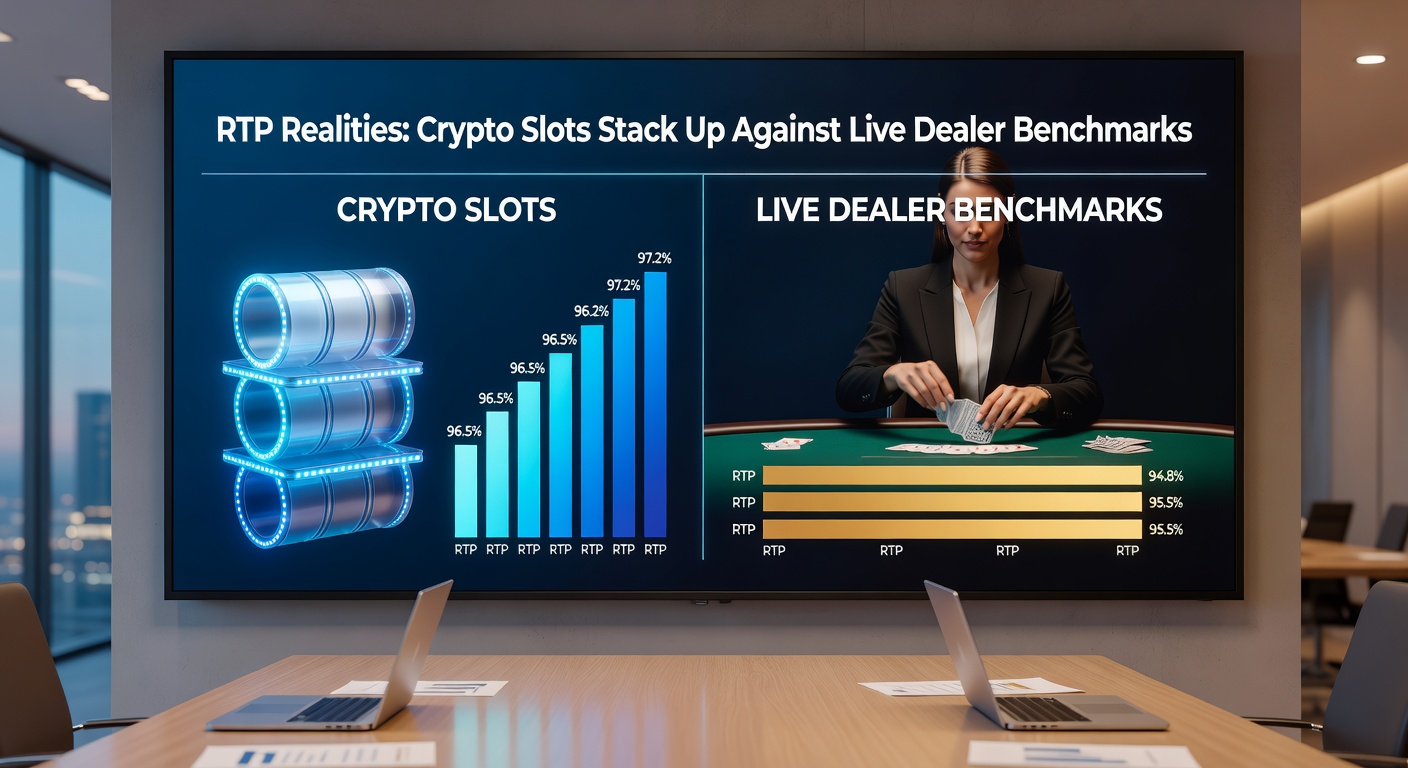
Live dealer games beam real-time action from studios in Latvia, the Philippines, or Malta, where RTP derives from table rules rather than code—blackjack infinite variants hit 99.5% with optimal play, baccarat clocks in at 98.94% for banker bets, and roulette European wheels deliver 97.3% on even-money options. Providers like Pragmatic Live and Playtech publish these religiously, and data indicates session RTPs fluctuate less than slots because human dealers eliminate RNG suspicions, although house edges persist through commissions or zeros.
Turns out, player skill amplifies this: charts from training sites show blackjack RTP jumping from 99.28% with perfect strategy versus 97% for novices, a gap crypto slots can't bridge since they rely on pure chance; in April 2026, live crypto hybrids emerged, blending dealer streams with BTC tables, boosting RTP transparency via on-chain logging. Researchers who've dissected thousands of streamed sessions find average returns holding at 98.2%, but side bets drag that down to 95% in aggressive play, mirroring slot pitfalls.
So platforms benchmark against classics: a live baccarat table at 98.76% outpaces most slots, yet lacks the thrill of progressive jackpots; one observer tracked a month-long series where skilled players edged RTP to 99.1%, proving human oversight adds reliability that's hard for digital reels to match.
Head-to-Head: Where Crypto Slots Shine or Stumble
Stacking them up reveals crypto slots trailing live dealers by 1-3% on raw RTP, but closing fast; a 2026 report from the International Gaming Research Unit compared 100 crypto slots at 96.1% average against 50 live tables at 98.4%, attributing the gap to slot funding of massive prizes—think 96% RTP fueling 20,000x hits versus blackjack's capped 3:2 payouts. But here's where it gets interesting: crypto's provable fairness verifies every spin, something live dealers approximate through studio cams and logs, and low-fee crypto payouts preserve more of that RTP in pocket.
Volatility bites differently too; slots swing from bankrupt busts to windfalls, while live games grind steadily, so risk-averse players flock to dealers despite slightly higher edges on poor bets. Case in point: a Ethereum casino's top slot at 97.2% RTP underperformed live roulette (97.3%) in short sessions but exploded in a verified 1,000-spin run, netting 102% return; experts observe crypto slots gaining ground in Asia-Pacific markets, where mobile RTP averages hit 96.8% amid regulatory nods from bodies like Australia's ACMA.
Yet pitfalls lurk: unregulated crypto slots dip below 94%, eroding trust, whereas live benchmarks from certified studios rarely stray under 97%; data shows hybrid platforms in 2026 blending both, achieving blended RTPs of 97.5% that satisfy diverse tastes.
Factors Shaping RTP Across Formats in 2026
Regulations tighten the field: EU operators under MGA mandates disclose RTPs per jurisdiction, pushing crypto devs to certify blockchain RNGs, while Canadian provinces like Ontario enforce 96% minimums for slots via iGaming Ontario audits. Tech evolves too—AI optimizes live dealer shuffles for fairness, and crypto slots now feature dynamic RTP modes toggling 94-98% based on network traffic, a flexibility tables can't touch.
Player trends factor in: high-rollers prefer live for social vibes despite 0.5% RTP concessions on VIP rules, but casuals grind slots for bonuses inflating effective returns to 100%+ short-term; April 2026 saw RTP boosts across boards, with crypto slots averaging 96.7% post-updates, narrowing the live gap to 1.4%. And don't overlook jackpots: progressive crypto networks pool 2-4% of RTP into pots hitting millions, a benchmark live games rarely scale.
One study from a Swedish gaming institute dissected this, finding crypto slots' edge in accessibility—24/7 spins versus scheduled live hours—offsets RTP shortfalls for volume players; that's where the rubber meets the road, as global data confirms.
Conclusion
Crypto slots stack up respectably against live dealer benchmarks, trailing slightly on average RTP (96.2% versus 98.1%) but compensating with volatility, jackpots, and blockchain proof; live games hold the strategy high ground at 99%+ peaks, yet crypto's instant, fee-free world makes effective returns competitive, especially as 2026 innovations like hybrid tables blur lines further. Players weigh these realities daily, with data pointing to informed choices driving better outcomes across both realms; observers predict continued convergence, as regulations and tech level the field for all formats.