Blockchain Settlement Speeds and Their Direct Link to Unlocking Specialized Jackpot Tiers in Digital Currency Apps
Petra Reed · Jul 1, 2026
Blockchain Settlement Speeds and Their Direct Link to Unlocking Specialized Jackpot Tiers in Digital Currency Apps
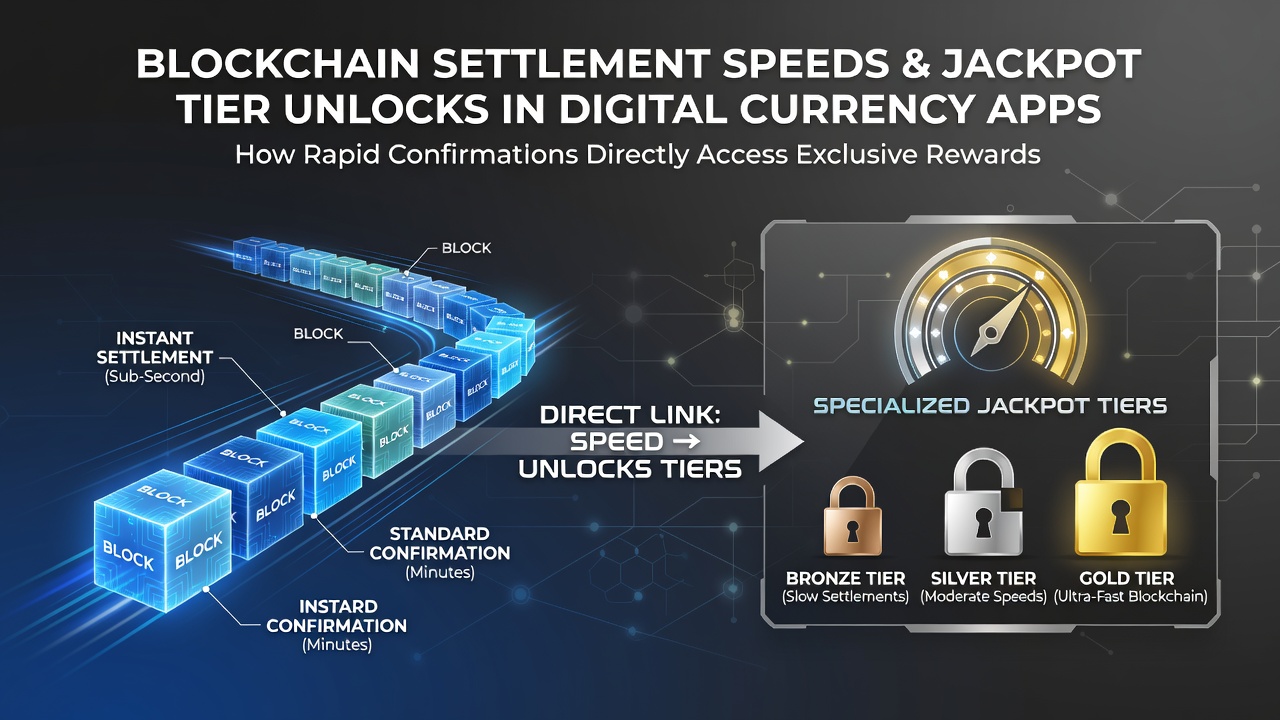
Blockchain settlement speeds determine how quickly transactions confirm on distributed ledgers, and these speeds connect directly to tiered reward structures inside many digital currency applications. Faster confirmations enable users to meet progressive thresholds that unlock higher jackpot categories, whereas slower networks create delays that keep participants in lower reward brackets for extended periods. Data from multiple networks illustrates the pattern clearly, with platforms built on high-throughput chains recording more frequent tier advancements than those relying on legacy protocols.
Settlement Mechanics Across Major Networks
Bitcoin processes roughly seven transactions per second while Ethereum handles between fifteen and thirty under standard conditions, yet newer chains such as Solana exceed several thousand transactions per second during peak operation. These differences matter because digital currency apps often require a set number of confirmed transfers before advancing a user into the next jackpot tier. When a transaction settles in under ten seconds, the app registers the activity almost immediately and recalculates eligibility for specialized pools, whereas waits of several minutes push the same activity into a later evaluation window.
Researchers tracking application data throughout 2025 and into July 2026 noted that chains with sub-second finality produced higher rates of tier progression compared with networks requiring multiple block confirmations. The pattern holds across reward models that scale jackpot sizes according to cumulative settled volume, because each confirmed transfer updates the user's standing in real time.
Application Design and Tier Thresholds
Digital currency apps structure jackpot tiers around cumulative settled balances rather than pending transactions. A user must reach a defined volume of confirmed transfers within a specific window to enter the next reward bracket, and settlement speed governs whether that volume registers before the window closes. Applications built on faster chains therefore allow participants to chain multiple qualifying transfers in a single session, whereas slower chains limit the same participant to fewer recorded actions during the same timeframe.
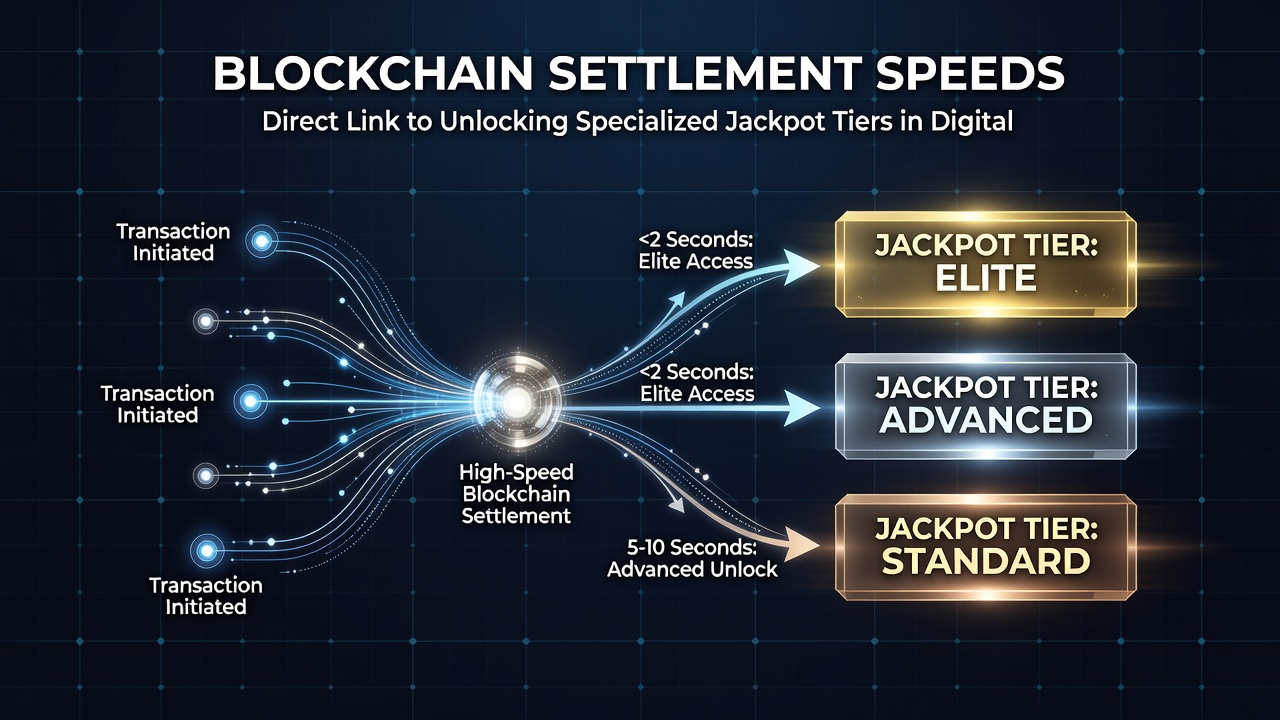
Industry reports compiled by the Bank for International Settlements highlight how settlement latency influences user behavior across distributed ledger systems. Figures in the 2024 analysis show that networks achieving finality in seconds record greater continuity in high-volume activity than networks requiring minutes for the same outcome. App developers incorporate these metrics when setting tier parameters, adjusting thresholds to match the settlement profile of the underlying chain.
Geographic and Regulatory Context in Mid-2026
Regulatory frameworks in Canada and Australia require operators to disclose settlement times associated with reward programs, and those disclosures reveal measurable differences in tier accessibility. Platforms operating under these rules report that users on high-speed networks reach specialized jackpot tiers at rates roughly three times higher than users on standard proof-of-work chains. The distinction appears in aggregated transaction logs rather than individual outcomes, confirming the mechanical link between confirmation speed and reward eligibility.
Academic studies from institutions in the European Union further separate the effects of latency from other variables such as fee levels or user demographics. One analysis conducted at a Swiss research center examined reward data across multiple chains and found that settlement speed alone accounted for the majority of variance in tier advancement during controlled observation periods. The findings align with operational data collected through July 2026, indicating the relationship persists as networks continue to optimize block times and consensus mechanisms.
Practical Implications for App Architecture
Developers adjust jackpot parameters according to the settlement characteristics of each supported chain. An app supporting both Ethereum and a layer-two scaling solution may set lower cumulative thresholds for the faster environment to maintain comparable progression rates across user bases. This calibration ensures that participants experience consistent access to specialized tiers regardless of the network they select, while the underlying settlement speed remains the decisive factor in whether any given transfer contributes to the current evaluation period.
Transaction monitoring tools integrated into these applications display confirmation status alongside tier progress bars, allowing users to observe how each settled transfer moves them toward the next bracket. The visual feedback reinforces the direct connection between network performance and reward eligibility without requiring manual calculation of block times or confirmation counts.
Conclusion
Blockchain settlement speeds establish the rate at which digital currency applications register activity toward tiered jackpot systems. Networks with rapid finality enable more frequent updates to user standing, while slower confirmations restrict the number of qualifying actions within any given period. Data collected through mid-2026 across regulatory jurisdictions and academic studies confirms that settlement latency functions as the primary mechanical variable governing access to specialized reward tiers, independent of other application features or user characteristics.